Waits Guide
Learn the different wait patterns (machi) in Riichi Mahjong
A wait (machi) determines which tiles can complete your hand when in tenpai. Understanding waits is essential for evaluating hand efficiency and making strategic decisions.
Basic Waits
These five fundamental wait patterns form the foundation of tenpai hands. Mastering them is essential for efficient hand-building.
Ryanmen (Two-Sided Wait)
Max 8 tiles
The strongest basic wait. With two consecutive tiles, you wait on both ends to complete a sequence. Ryanmen is required for Pinfu and offers the highest acceptance rate.
Prioritize shaping your hand toward ryanmen waits. The high tile count makes this ideal for speed-focused play, though skilled opponents may read it through suji.
Kanchan (Middle Wait)
Max 4 tiles
A gap wait where you need the middle tile to complete a sequence. While limited to one tile type, kanchan shapes often improve into ryanmen with the right draws.
Keep kanchan shapes early—they frequently upgrade to ryanmen. In tenpai, kanchan is weaker, but acceptable with high hand value (mangan or better).
Penchan (Edge Wait)
Max 4 tiles


An edge wait at the 1-2 or 8-9 boundary. Like kanchan, it's a single-tile wait, but with less potential for improvement due to the edge position.
Try to extend penchan into 4-tile shapes (like 1234) before tenpai. In honitsu/chinitsu hands, penchan can be surprisingly effective if that suit remains in the wall.
Shanpon (Double Pair Wait)
Max 4 tiles (per pair)
A wait on two pairs, where either completing a triplet wins the hand. Though theoretically up to 8 tiles, visibility of the pairs in discards often limits actual acceptance.
Works well with triplet-based hands like Toitoi. Choose between shanpon and ryanmen based on your hand's direction—if building toward triplets, shanpon fits naturally.
Tanki (Pair Wait)
Max 3 tiles
Waiting for a single tile to complete the pair (head). The narrowest wait, but harder for opponents to read. Chiitoitsu always finishes with tanki.
Tanki on dora or red fives offers explosive value despite the narrow wait. Waiting on tiles opponents consider safe can catch them off-guard.
Multi-Sided Waits
Compound patterns that wait on multiple tiles. These powerful waits significantly increase your winning chances.
Nobetan (Extended Tanki)
Max 6 tiles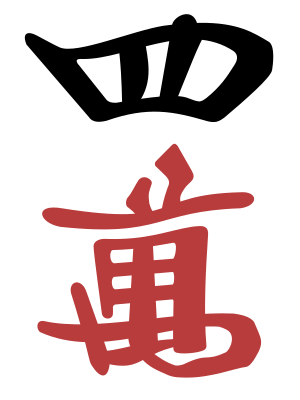
A 4-tile straight shape (like 1234) that waits on both ends for the pair. Think of it as two tanki waits combined, doubling your acceptance.
An excellent upgrade from single tanki. When holding a 4-tile run, you naturally gain this efficient 2-type wait.
Sanmenchan (3-Way Wait)
Max 12 tiles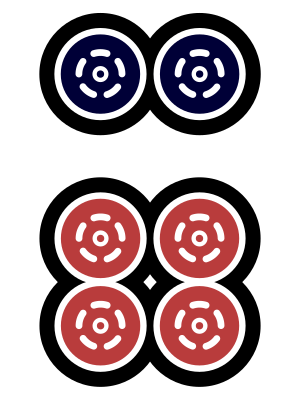

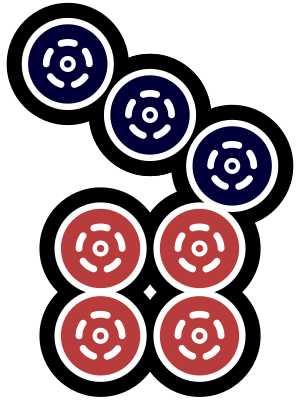
A 5-tile straight (like 23456) waiting on three different tiles. One of the strongest waits in the game, dramatically improving your winning rate.
Multi-sided waits justify aggressive riichi decisions. However, the complexity increases furiten risk—always verify all your waiting tiles before declaring riichi.
Strategic Considerations
Key principles for choosing and evaluating waits in actual play.
Prioritize Ryanmen
In early hand-building, preserve shapes that can become ryanmen. Avoid committing to kanchan or penchan waits too early unless necessary.
Higher Value Tolerates Weaker Waits
A kanchan wait on a potential mangan hand is often worth pursuing. The reward justifies the lower acceptance rate.
Riichi Timing
Consider wait quality alongside turn count and hand value. A cheap hand with kanchan in late game may not warrant riichi, while multi-sided waits can pressure opponents effectively.
Watch for Furiten
With multi-sided waits, check if any waiting tile appears in your discards. Furiten blocks ron, forcing you to rely on tsumo only.